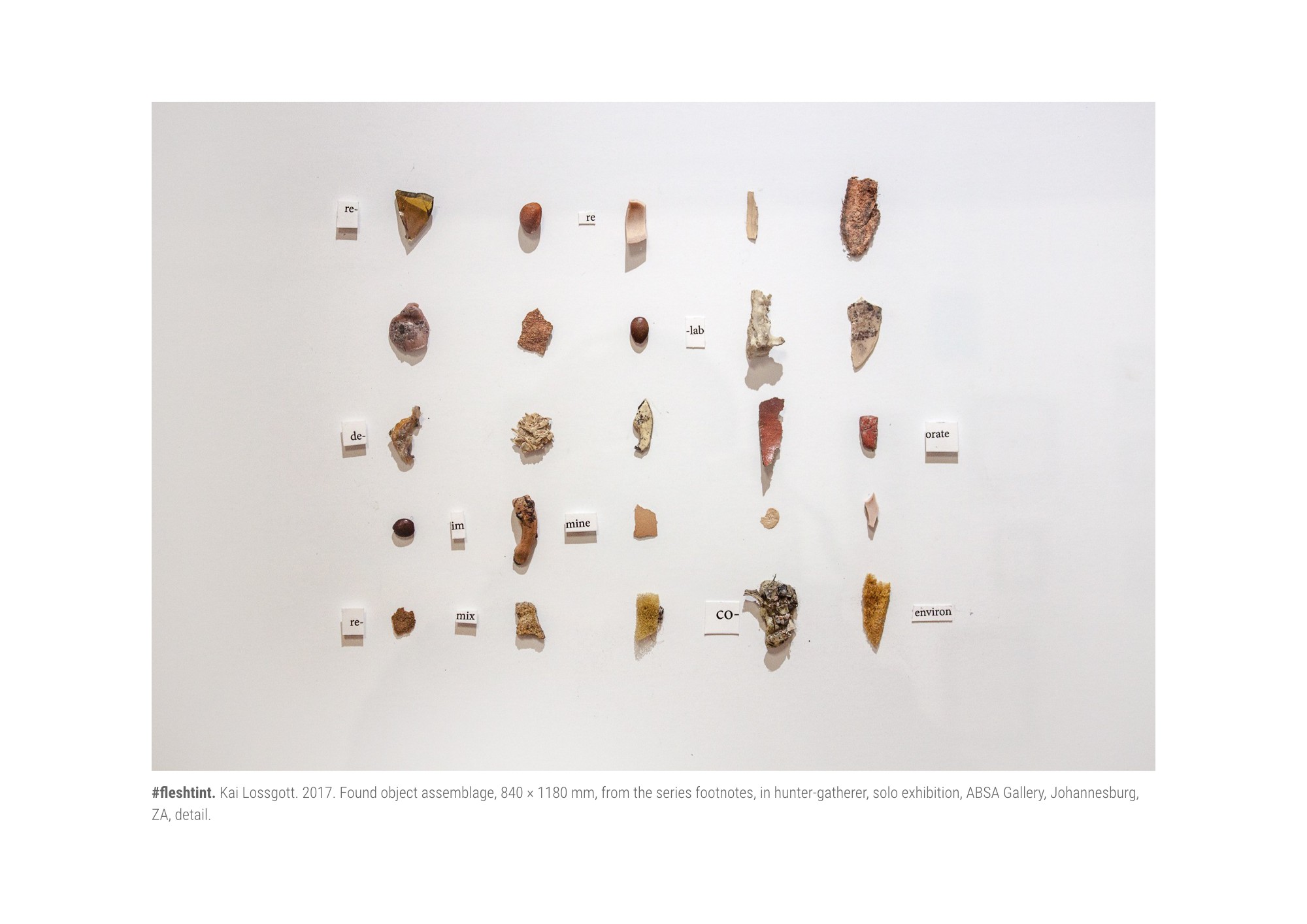
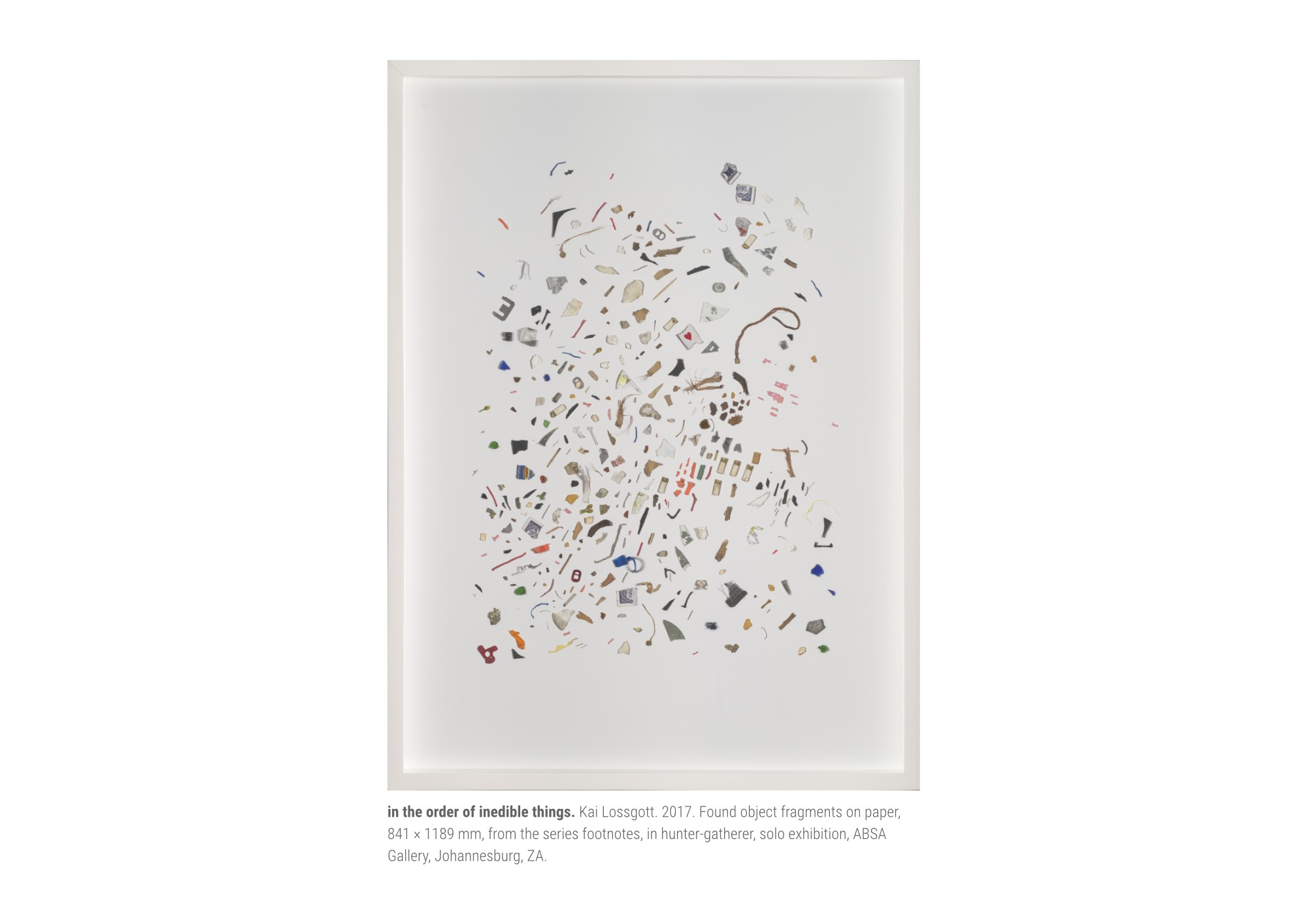
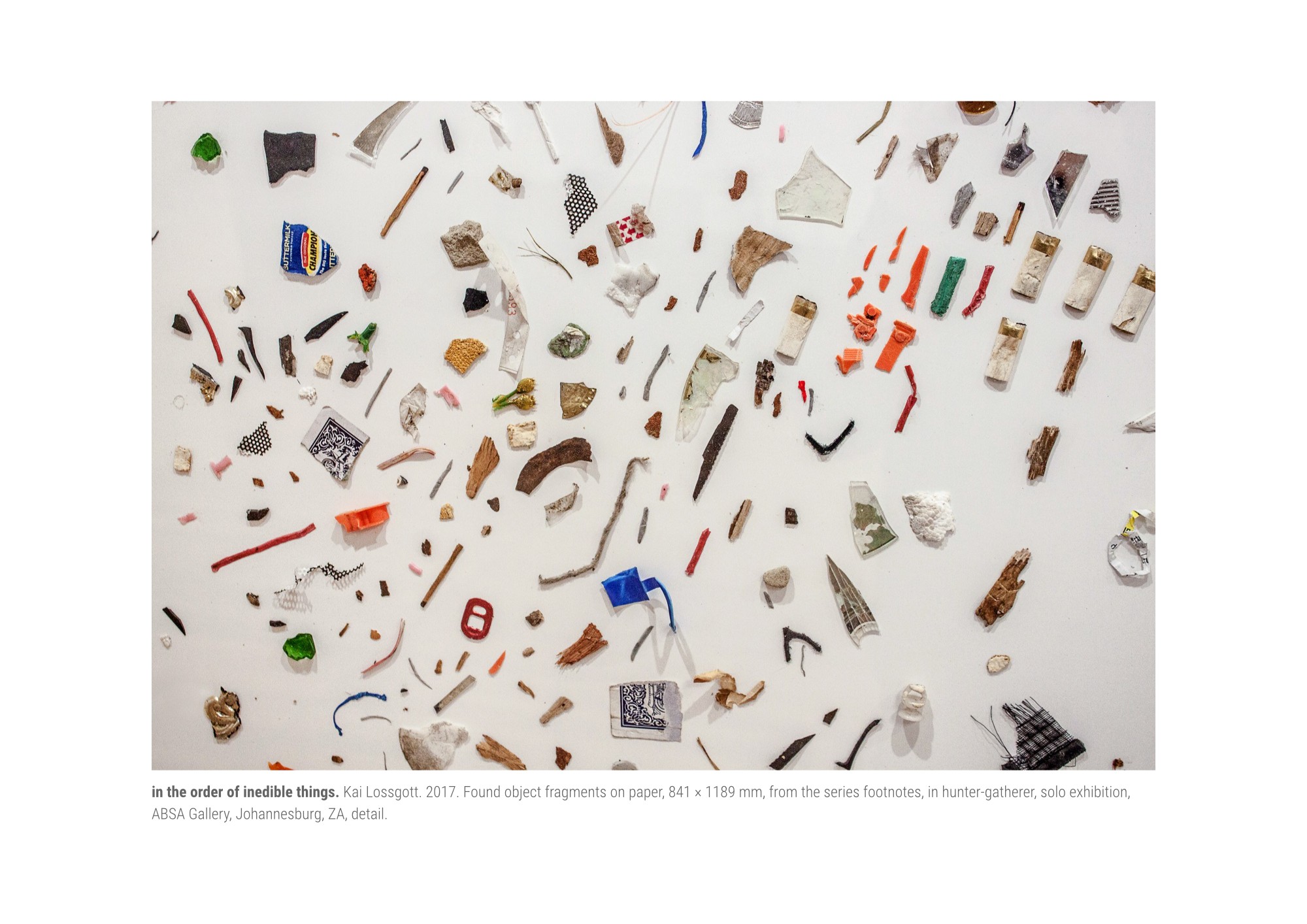
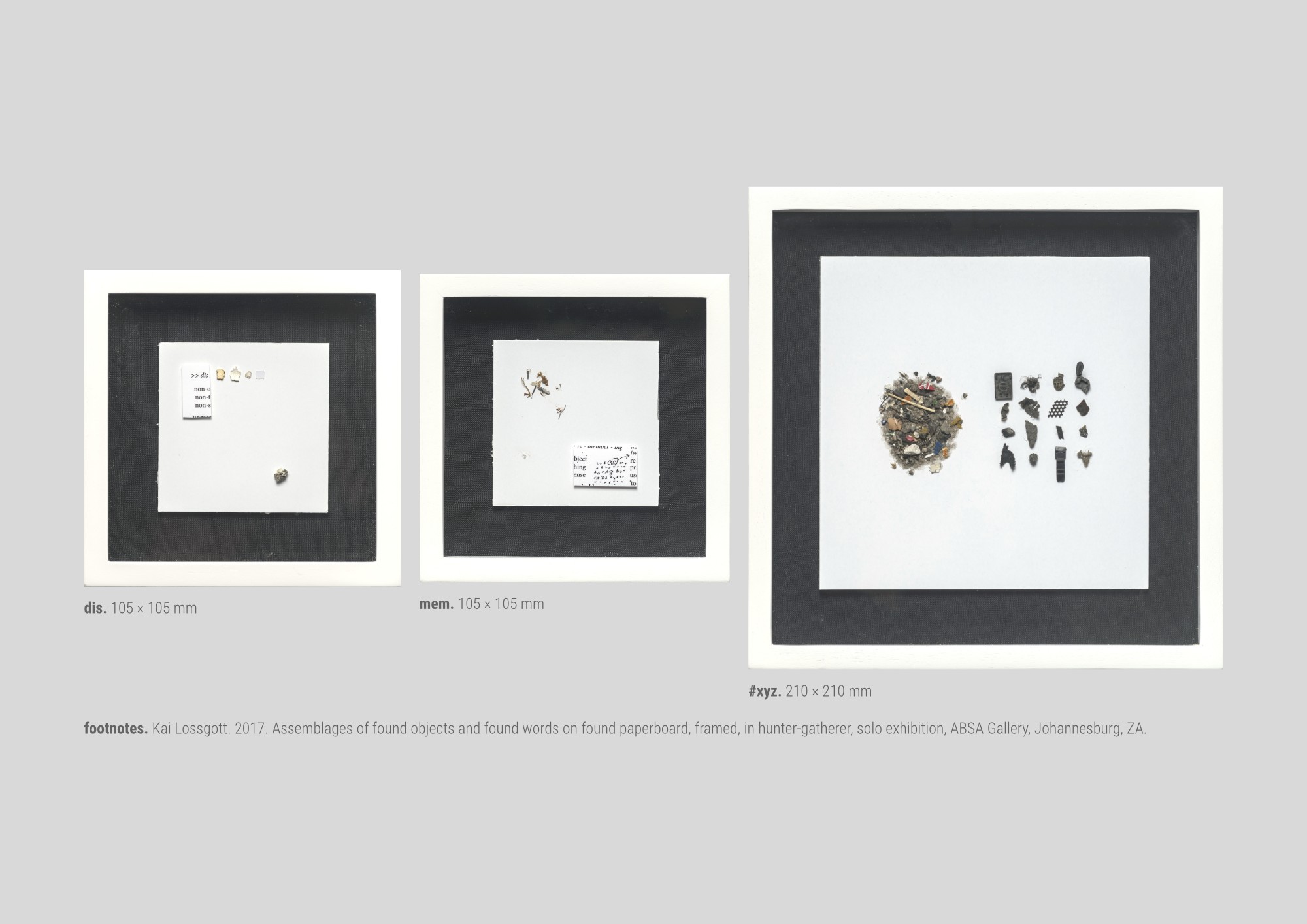
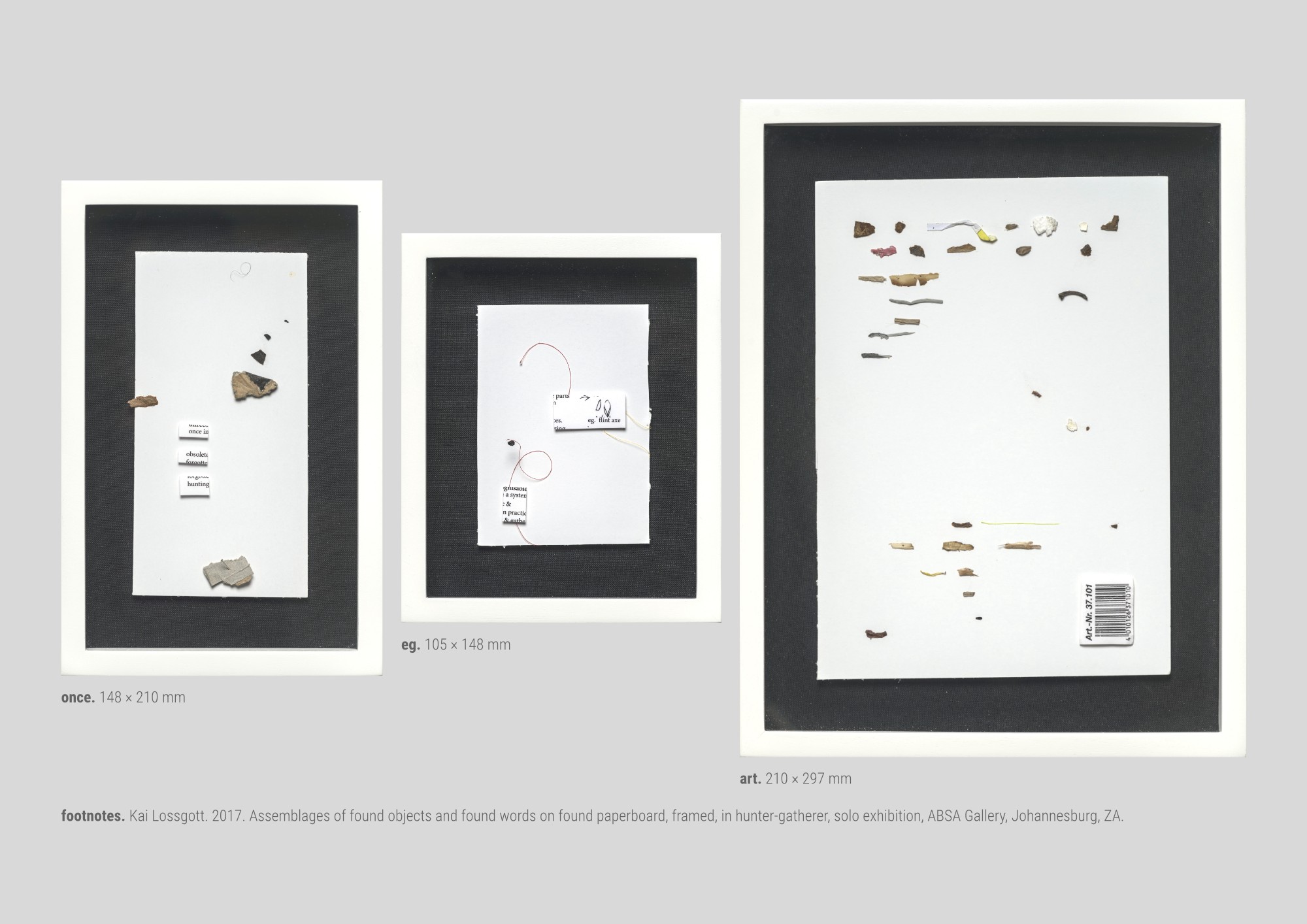
footnotes. Kai Lossgott. 2017. Assemblages of found objects and found words on found paperboard, framed: dis, mem, #xyz, once, eg., art; #fleshtint, 840 × 1180 mm; in the order of inedible things, 841 × 1189 mm. hunter-gatherer, solo exhibition, ABSA Gallery, Johannesburg, ZA, 21 May – 15 June 2017.
“The Latin prefix ‘dis-’ indicates ‘apart’, ‘not’, ‘asunder’, ‘away’, ‘utterly’.”
— Virginia MacKenny, offering a flower: the work of kai lossgott, in hunter-gatherer, exhibition catalogue, ABSA Gallery, Johannesburg, 2017
footnotes began with the words printed on things: slogans, labels and instructions on packaging, and the fragments left once it is thrown away. These are the platitudes of mass communication, owned by brands and worn thin by repetition. In The Road, Cormac McCarthy writes of “the names of things slowly following those things into oblivion”. It is nostalgia for a world that is gone. These fragments are what remains after the end of something: its aftermath.
Cutting them apart is a way of taking language back from that waste. I set the pieces among found objects on found paperboard, in new selections and combinations: footnotes to what is left over. A single syllable (dis, mem, once, eg., art) then has to be read slowly, as if for the first time. The same is not the same when it returns, but only if our perception has changed.
Some works are ordered in rows, others scattered, and parts are left unfinished. They play between order and chaos. The small stands for the large: a shard of packaging stands for the whole system that made it. These are fragments of what could become words.
The booklet foot- notes (2019) sets the works beside three numbered footnotes: polymer; dis-, “apart, asunder, in a different direction”; and ostracize, from the Greek ostrakon, a broken pot on which names were written in votes to banish someone.